News

Seahorse fry (baby) at Studland
31-08-2010

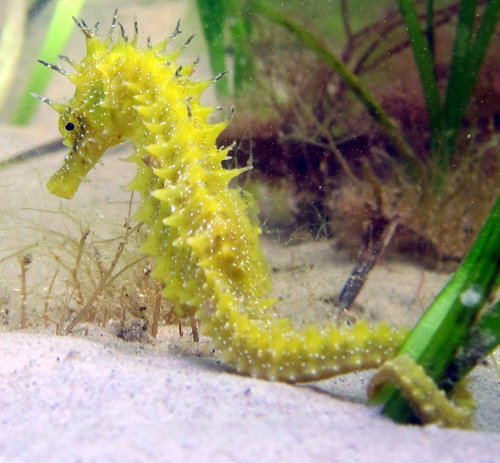
On Saturday the 28th of August Seahorse Trust divers found the smallest Seahorse on the site since the survey started.

The female Spiny Seahorse who is only about 2 months old would have been born in June of this year and it is fantastic news.  Over the years of the survey we have found adults, including pregnant males and juveniles and we knew they were giving birth on the site but we always wondered where the babies (fry ) went to and know we know they remain on the site but are very difficult to see. Despite the awful weather on Saturday (1 metre visibilty) this pretty ,small Seahorse was seen clinging to a piece of seagrass. The trust researchers managed to take measurements and some photographs before it set sail deeper into the seagrass bed,

At this age the fry will be looking for the best areas to feed and set up their territories and subject to no other Seahorse being in residence they will set up home and hold this territory until the first of the storms come in the Autumn when they move into deeper safer waters.

Out of the 3 to 5 hundred fry born to each male every month less than 2 or 3 will survive to adulthood due to predation by all sorts of fish species. Seahorse fry are a nice bite sized piece of food for them. In turn Seahorse fry eat a staggering 3,000 plus pieces of plankton every 24 hours.

The 4cm fry being measured on the seagrass.


Countryfile at Studland Bay
17-08-2010

On Tuesday the 10th of August Countryfile came down to our study site at Studland to film the work we are doing with tagging the Seahorses. Trust director Neil trained Ellie prior to the dive to be able to hold the Seahorses without stressing them so that he could photograph the profile pictures of each of the Seahorses so that it could be added to the database. The data being gathered about this unique colony of Seahorses is allowing the trust to help put the information into management plans for Stuudland Bay in Dorset and the other Seahorses around the British Isles.

The tagging work is done under very strict conditions as part of the Trusts license and anyone wanting to work with Seahorses in the wild in England need to have a license to film (or photograph) or work with them.

Ellie holding one of the Spiny Seahorses ready to have it s profile picture taken

Ellie holding one of the Spiny Seahorses ready to have it s profile picture taken

Ellie talking to the camera explaining about the work of the trust

Ellie talking to the camera explaining about the work of the trust

The film crew working in the pouring rain and wind

The film crew working in the pouring rain and wind

The Countryfile programme is to be aired on Sunday 22nd of August 2010 on BBC One.


Continuing damage to Studland seagrass
03-08-2010

This year is probably one of the worst for damage to the seagrass meadow at South Beach, Studland Bay in Dorset. We have noticed that the size of the mooring chain damage has increased this year with some of the holes measuring some 30 metres across. The mooring chains and blocks that hold the moorings are more exposed than every before and creating desert like conditions where very little lives.

The following pictures (copyright The Seahorse Trust) were taken on Saturday the 31st of July 2010 on site at Studland.

The pictures above show just a few of the mooring chains that are causing extensive danage on the site; these are attached to some of the moorings on the site.  The pictue of the round lump of metal is the mooring block one of these moorings is attached to.

These pictures above show the reason why environmentally friendly moorings should be put in on the site to allow boat use without damaging the environment.. This needs to be a case of urgency before the seagrass is damaged beyond repair.


There is another equally serious problem that is occuring at Studland this year and that is the  dying off of large areas of the seagrass as can be seen by the pictures below.

The following picture show the seagrass is turning white and dying in large patches.


 The picture below shows how an anchor has cut through the seagrass which will be undermined by the current and tides causing long term damage to the seagrass meadow.

The third and equally damaging process on the site is the anchors that are digging up the seagrass at an alarming rate. If you can imagine having a prisitine lawn and you have 300 plus people digging holes in it, the lawn will soon be destrpyed; this is what is happening at Studland with the anchors but there is an answer to the mooring and anchor problems and that is to put in enviornmentally friendly moorings and ask boat users to use these and not drop anchors or use the exisiting damaging moorings.

Please lobby Natural England and Crown estates to put in these moorings so that we can preserve this site and the seahorses for the future.


Spiny Seahorses being measured by trust volunteer Beccy
27-07-2010

During one of our dives last Saturday (24/7/2010) we spotted two new seahorses a male and a female and excitingly it was the first seahorses that our volunteer Beccy has seen on the site. Beccy is being trained to be part of our survey tagging team and you can see from the pictures as the Seahorse is being measured and having its profile picture being taken for the database.

Beccy holding the seahorse to have its profile taken for the database.

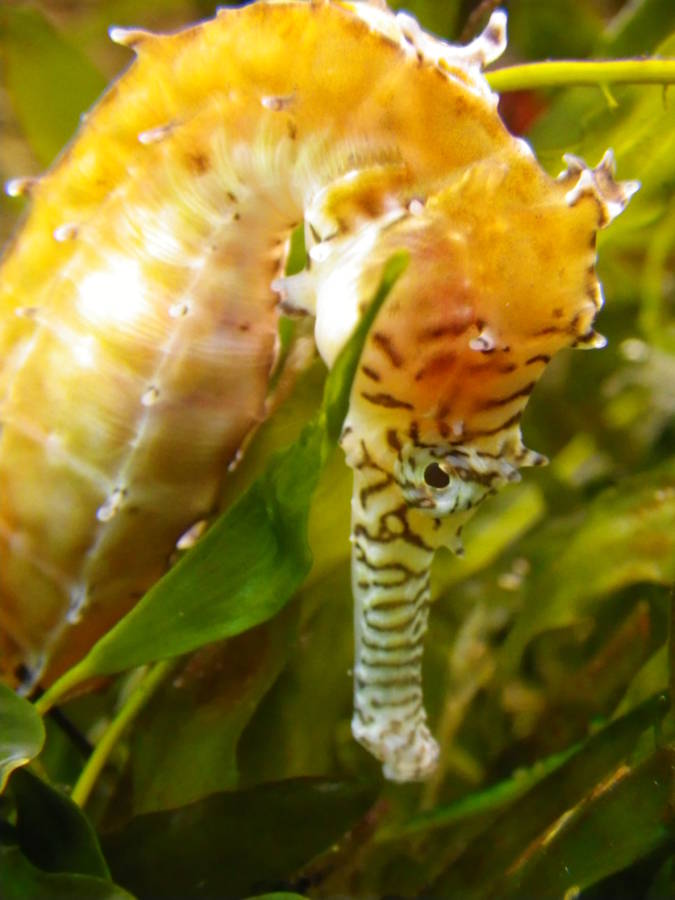
The female Spiny Seahorse being measured, this just takes seconds and does not cause the Seahorse any stress at all. The spines on younger Seahorses tend to be longer and they 'wear' as the seahorse gets older.

The Seahorses profile which is used to help identify individual Seahorses that are too small to tag. Each Seahorses has a unique set of spines and by taking a profile picture we can keep a record in our database. As can be seen from the picture the spines branch which led to the original name of Many Bracnched Seahorse.

All pictures on this site are subject to copryright of The Seahorse Trust 2010


Sad farewell to Steve
27-07-2010

Its with sadness we have to say goodbye to our original volunteer Steve at the Seahorse Tagging Project at Studland. Without Steve this project would not have happened and he has worked hard over the last few years in spotting Seahorses and helping us with the tagging work.

Steve is well known for his marine and terrestrial conservation work and was very instrumental in getting Lyme Bay made into a protected area. His photography is well known and he has kindly lent The Seahorse Trust a number of images in the past.

Steve has decided to go a different route in his conservation work and we wish him all the best for the future and should he wish to come back we would appreciate his 'eagle' eye in spotting Seahorses.

Steve holding a Seahorse prior to its profile picture being taken.


Divers at Studland Bay in Dorset.
23-07-2010

We have been very busy this season diving on the study site at South Beach in Studland Bay in Dorset. With a large team of volunteers, we have now been diving several times a week  for a  few months and finding and tagging seahorses on most of the dives.

Strangely the seagrass bed has been covered with a thick layer of hair algae this year for several weeks which has led to some very strange positions for divers underwater as they have been upside down looking under the weed and finding the Seahorses.

We have a large number of dives planned for the summer and we kindly ask the boating community to look out for our dive flags which show clearly where the divers are. Earlier this season we had a few boat owners being silly with the divers in the water which without quick action by the divers could have been very dangerous indeed, possibly leading to serious injury or even death.

Page : 1 2 3